




26th Mar 2021
Most people probably think that a hay bale is an inert, inactive object. In actual fact though hay bales are akin to a living breathing organism. Rain falling on unprotected stacks, or dew condensing on bales, triggers microbes to go to work munching their way through the sugars contained in the hay. These are sugars that are needed by livestock, leading to problems with animal nutrition.
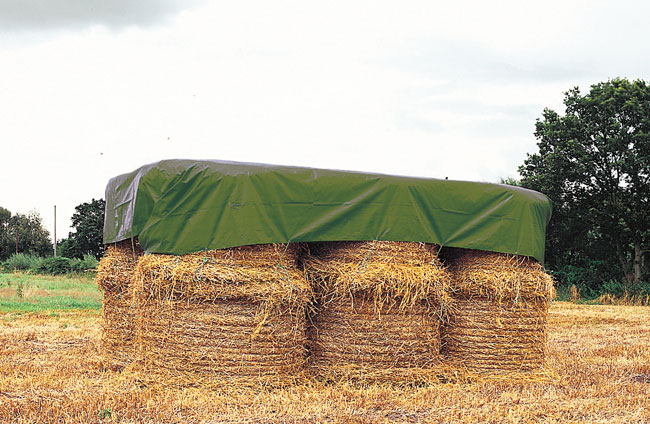
Saving hay (and money) with tarpaulins
Studies have shown that covering your hay bales with a tarp will save you money. In fact one study at Iowa State University showed that a $30,000 (£22,100) loss of value in hay bales due to spoilage and dry matter losses – could be reduced to a $14,500 (£10,680) loss by simply covering the bales with a tarp. Other advantages of covering hay with tarpaulins include:
- UV protection-as well as shielding from rain and dew, tarps protect from any nutritional loss caused by direct sunlight.
- Pest prevention- tarpaulins deter pests from getting into the hay, minimising contamination and damage.
- Regulation of temperature-when covered with tarpaulins hay can be kept at a more stable temperature, which reduces any degradation that extreme heat or cold may cause.
- Transportation-when covered with tarps it is easier to transport hay without the risk of it getting wet or damaged, which can be a great help for any farmer.
Using tarps with hay is the right choice
As we’ve seen above, the benefits of covering your bales with a tarp are clear. Visit our Farming category on our website to find the ideal hay tarpaulin for covering your bales as well as a whole host of other products that are great for farming applications. For more information about how to get the most out of using tarpaulins with hay, read on:
How to Build Tarpaulin Hay Covers
Building tarpaulin hay covers is a straightforward process that can help protect your hay from the elements. First, measure the dimensions of your hay bales to determine the size of the tarpaulin needed. Choose a heavy-duty tarpaulin that is waterproof and UV-resistant for durability. Lay the tarpaulin flat on the ground and place the hay bales on top. Drape the tarpaulin over the bales, ensuring it covers them completely. Secure the tarpaulin with ropes or bungee cords, tying them tightly around the bales. For added stability, you can use stakes to anchor the tarpaulin to the ground.
We hope you’ve found this article helpful. If you have any further questions, please feel free to give our friendly team a call on 01904 698813 or alternatively you can email us on: Customer.services@tarpaulinsdirect.co.uk.